Inflation Reduction Act of 2022 (HR 5376) – This legislation was originally introduced as the Build Back Better Act, President Biden’s signature bill of 2021. After suffering defeat in the Senate, the bill was later revised with fewer provisions to enhance its likelihood of passage, and renamed the Inflation Reduction Act. The bill authorizes funding for investments in domestic energy production and manufacturing with the goal of reducing U.S. carbon emissions by 40 percent by 2030. The bill provides tax credits for clean energy home enhancements and electric vehicle purchases, permits Medicare to negotiate prescription drug prices,and extendslower healthcare premiums for insurance purchased via the Affordable Care Act program through 2025. Also billed as a deficit reduction tool, the legislation imposes a minimum 15 percent corporate tax rate on large businesses with more than $1 billion in reported income, and a 1 percent excise tax on corporate stock buybacks. Furthermore, the bill increases previously reduced funding for the IRS in order to help track down and recoup taxes unlawfully skirted by high income earners. Initially introduced on Sept. 27, 2021, the Act was passed by both the House and the Senate in August and signed into law on Aug. 16.
CHIPS and Science Act of 2022(HR 4346) – This legislation includes $280 billion in funding to build a domestic supply chain for semiconductor chips as well as scientific and technological research to help keep U.S. industries competitive. The bill authorizes new and expanded investments in STEM education for K-12 to community college, undergraduate and graduate education.The bill was enacted on Aug. 9.
Bipartisan Safer Communities Act (S 2938) – Introduced by Sen. Marco Rubio (R-FL) on Oct. 5, 2021, this Act expands background checks for anyone under age 21 who seeks to purchase firearms, and offers incentives for states to pass red flag laws to remove weapons from people deemed a threat to themselves or others. The bill provides $11 billion in funding for mental health services in schools and local clinics, and to support mental health courts, drug courts, veterans’ courts and extreme risk protection orders. The final version of the bill passed in the Senate on June 23 and in the House on June 24. President Biden signed the bill into law on June 25.
Honoring our PACT Act of 2022 (S 3373) – This legislation, which expands healthcare benefits for veterans who were exposed to burn pits and other toxic substances while on active duty, was introduced by Sen. Tim Kaine (D-VA) on Dec. 9, 2021. Amid much fanfare and controversy this summer, this bipartisan bill was finally passed in both the House (July) and the Senate (August, requiring a second vote) and was signed into law by President Biden on Aug. 10.
PPP and Bank Fraud Enforcement Harmonization Act of 2022 (HR 7352) – Introduced by Rep. Nydia Velazquez (D-NY) on March 31, this bill amends the Small Business Act to extend the statute of limitation to 10 years for criminal charges and civil enforcement against borrowers under the Paycheck Protection Program, enacted during the early stages of the COVID-19 pandemic. The bill passed in the House on June 8 and in the Senate on June 28. It was enacted on Aug. 5.
Productive Month Passing Domestic Manufacturing and Prescription Drug Allowances, Climate and Gun Violence Mitigation, and Veteran Burn Pit Healthcare Legislation
September 1, 2022 · Blog, Congress at Work, News
⏱ 3 min read
Inflation Reduction Act of 2022 (HR 5376) – This legislation was originally introduced as the Build Back Better Act, President Biden’s signature bill of 2021. After suffering defeat in the Senate, the bill was later revised with fewer provisions to enhance its likelihood of passage, and renamed the Inflation Reduction Act. The bill authorizes funding for investments in domestic energy production and manufacturing with the goal of reducing U.S. carbon emissions by 40 percent by 2030. The bill provides tax credits for clean energy home enhancements and electric vehicle purchases, permits Medicare to negotiate prescription drug prices,and extendslower healthcare premiums for insurance purchased via the Affordable Care Act program through 2025. Also billed as a deficit reduction tool, the legislation imposes a minimum 15 percent corporate tax rate on large businesses with more than $1 billion in reported income, and a 1 percent excise tax on corporate stock buybacks. Furthermore, the bill increases previously reduced funding for the IRS in order to help track down and recoup taxes unlawfully skirted by high income earners. Initially introduced on Sept. 27, 2021, the Act was passed by both the House and the Senate in August and signed into law on Aug. 16.
CHIPS and Science Act of 2022(HR 4346) – This legislation includes $280 billion in funding to build a domestic supply chain for semiconductor chips as well as scientific and technological research to help keep U.S. industries competitive. The bill authorizes new and expanded investments in STEM education for K-12 to community college, undergraduate and graduate education.The bill was enacted on Aug. 9.
Bipartisan Safer Communities Act (S 2938) – Introduced by Sen. Marco Rubio (R-FL) on Oct. 5, 2021, this Act expands background checks for anyone under age 21 who seeks to purchase firearms, and offers incentives for states to pass red flag laws to remove weapons from people deemed a threat to themselves or others. The bill provides $11 billion in funding for mental health services in schools and local clinics, and to support mental health courts, drug courts, veterans’ courts and extreme risk protection orders. The final version of the bill passed in the Senate on June 23 and in the House on June 24. President Biden signed the bill into law on June 25.
Honoring our PACT Act of 2022 (S 3373) – This legislation, which expands healthcare benefits for veterans who were exposed to burn pits and other toxic substances while on active duty, was introduced by Sen. Tim Kaine (D-VA) on Dec. 9, 2021. Amid much fanfare and controversy this summer, this bipartisan bill was finally passed in both the House (July) and the Senate (August, requiring a second vote) and was signed into law by President Biden on Aug. 10.
PPP and Bank Fraud Enforcement Harmonization Act of 2022 (HR 7352) – Introduced by Rep. Nydia Velazquez (D-NY) on March 31, this bill amends the Small Business Act to extend the statute of limitation to 10 years for criminal charges and civil enforcement against borrowers under the Paycheck Protection Program, enacted during the early stages of the COVID-19 pandemic. The bill passed in the House on June 8 and in the Senate on June 28. It was enacted on Aug. 5.
Disclaimer
These articles provide general information on tax, accounting, and financial topics for small businesses and individuals. They are educational in nature and are not specific legal, accounting, financial, tax, or other professional advice, and should not be relied upon as such. This content was prepared by Service2Client and may have been reviewed or edited by the website owner for accuracy and compliance. Look for a trust mark below for verification details. No representation is made that any approach described will achieve a particular result, and no regulatory or professional body has reviewed or endorsed this content. Because each situation is different, readers should consult a qualified professional about their specific circumstances before acting. Images accompanying these articles are protected by copyright and may not be copied or reused.
Supply Chain Security Training Act of 2021 (S 2201) – This legislation is designed to identify supply chain risks and develop a government program to train federal officials with supply chain risk management responsibilities to prepare and mitigate those risks. The training program would cover the complete acquisition life cycle, including funding for data access and processing as well as appropriate technology and communication vehicles. The bill was introduced by Sen. Gary Peters (D-MI) on June 23, 2021. It passed in the Senate on Jan. 11 and in the House on May 10. It was signed into law by the president on June 16.
Bridging the Gap for New Americans Act (S 3157) – Introduced by Sen. Amy Klobuchar (D-MI) on Nov. 3, 2021, this bill recently passed in the Senate on June 23 and is in the House for consideration. The bipartisan bill would authorize a study on employment opportunities for naturalized and lawfully present non-U.S. citizens who hold professional credentials from non-U.S. countries. For example, the opportunity to employ doctors with medical degrees to help meet U.S. demand in the growing shortage of physicians. The Department of Labor would identify and recommend how to address factors that affect their qualifications for U.S. jobs in various fields of expertise.
State and Local Government Cybersecurity Act of 2021(S 2520) – This legislation expands the Department of Homeland Security (DHS) responsibilities for mitigating cybersecurity threats, risks and vulnerabilities with more proactive and defensive measures.The Act was introduced by Sen. Gary Peters (D-MI) on July 28, 2021. It passed in the Senate on Jan. 11 and in the House on May 17. It was signed into law on June 21.
South Florida Clean Coastal Waters Act of 2021 (S 66) – An algal bloom is a rapidly growing algae that can produce toxic conditions harmful to humans, animals, aquatic ecosystems and the economy. They are most prevalent in South Florida. The bill, introduced by Sen. Marco Rubio (R-FL) on Jan. 27, 2021, directs the Inter-Agency Task Force on Harmful Algal Blooms and Hypoxia to develop a plan to address how to reduce and control theeffects of the blooms throughout the South Florida ecosystem. This legislation passed in the Senate on March 8 and in the House on May 11. President Biden signed the bill into law on June 16.
Active Shooter Alert Act of 2022 (HR 6538) – Introduced by Rep. David Cicilline (D-RI) on Feb. 1, this bill would direct the Department of Justice to set up a national alarm system specifically to warn citizens of an active shooter event. The DOJ also would work with state, tribal and local governments to coordinate networks and establish procedures for how to respond to active shooters. The bill passed in the House on July 13. It is presently under consideration in the Senate, where it faces opposition because many believe it duplicates the existing Integrated Public Alert and Warning System (IPAWS). The premise is that a separate system for active shooter events would risk desensitizing citizens with false alarms.
Advanced Air Mobility Coordination and Leadership Act (S 516) – This bill was introduced by Sen. Jerry Moran (R-KS) on March 11, 2021. It passed in the Senate on March 23, 2022, and in the House on June 14, but the House made changes and returned it to the Senate. The purpose of this legislation is to establish an Advanced Air Mobility (AAM) interagency task force to plan and coordinate efforts for urban-based cargo and passenger aircraft (e.g., drones, air taxis, air ambulances) in the United States. The program would address matters related to safety, infrastructure, physical security, cybersecurity and federal investment in order to integrate these new aircraft into existing airspace operations.
Women’s Health Protection Act of 2022 (HR 8296) – Introduced by Rep. Judy Chu (D-CA) on July 7, this bill passed the House on July 15 and is currently with the Senate. The bill would prohibit state governments from restricting access to abortion services (via drug prescription, telemedicine or immediate action) in situations where the provider determines that birth would endanger the mother’s life.
Strengthening the Supply Chain, the Professional Workforce, Cybersecurity and Coastal Ecosystems
August 1, 2022 · Blog, Congress at Work, News
⏱ 4 min read
Supply Chain Security Training Act of 2021 (S 2201) – This legislation is designed to identify supply chain risks and develop a government program to train federal officials with supply chain risk management responsibilities to prepare and mitigate those risks. The training program would cover the complete acquisition life cycle, including funding for data access and processing as well as appropriate technology and communication vehicles. The bill was introduced by Sen. Gary Peters (D-MI) on June 23, 2021. It passed in the Senate on Jan. 11 and in the House on May 10. It was signed into law by the president on June 16.
Bridging the Gap for New Americans Act (S 3157) – Introduced by Sen. Amy Klobuchar (D-MI) on Nov. 3, 2021, this bill recently passed in the Senate on June 23 and is in the House for consideration. The bipartisan bill would authorize a study on employment opportunities for naturalized and lawfully present non-U.S. citizens who hold professional credentials from non-U.S. countries. For example, the opportunity to employ doctors with medical degrees to help meet U.S. demand in the growing shortage of physicians. The Department of Labor would identify and recommend how to address factors that affect their qualifications for U.S. jobs in various fields of expertise.
State and Local Government Cybersecurity Act of 2021(S 2520) – This legislation expands the Department of Homeland Security (DHS) responsibilities for mitigating cybersecurity threats, risks and vulnerabilities with more proactive and defensive measures.The Act was introduced by Sen. Gary Peters (D-MI) on July 28, 2021. It passed in the Senate on Jan. 11 and in the House on May 17. It was signed into law on June 21.
South Florida Clean Coastal Waters Act of 2021 (S 66) – An algal bloom is a rapidly growing algae that can produce toxic conditions harmful to humans, animals, aquatic ecosystems and the economy. They are most prevalent in South Florida. The bill, introduced by Sen. Marco Rubio (R-FL) on Jan. 27, 2021, directs the Inter-Agency Task Force on Harmful Algal Blooms and Hypoxia to develop a plan to address how to reduce and control theeffects of the blooms throughout the South Florida ecosystem. This legislation passed in the Senate on March 8 and in the House on May 11. President Biden signed the bill into law on June 16.
Active Shooter Alert Act of 2022 (HR 6538) – Introduced by Rep. David Cicilline (D-RI) on Feb. 1, this bill would direct the Department of Justice to set up a national alarm system specifically to warn citizens of an active shooter event. The DOJ also would work with state, tribal and local governments to coordinate networks and establish procedures for how to respond to active shooters. The bill passed in the House on July 13. It is presently under consideration in the Senate, where it faces opposition because many believe it duplicates the existing Integrated Public Alert and Warning System (IPAWS). The premise is that a separate system for active shooter events would risk desensitizing citizens with false alarms.
Advanced Air Mobility Coordination and Leadership Act (S 516) – This bill was introduced by Sen. Jerry Moran (R-KS) on March 11, 2021. It passed in the Senate on March 23, 2022, and in the House on June 14, but the House made changes and returned it to the Senate. The purpose of this legislation is to establish an Advanced Air Mobility (AAM) interagency task force to plan and coordinate efforts for urban-based cargo and passenger aircraft (e.g., drones, air taxis, air ambulances) in the United States. The program would address matters related to safety, infrastructure, physical security, cybersecurity and federal investment in order to integrate these new aircraft into existing airspace operations.
Women’s Health Protection Act of 2022 (HR 8296) – Introduced by Rep. Judy Chu (D-CA) on July 7, this bill passed the House on July 15 and is currently with the Senate. The bill would prohibit state governments from restricting access to abortion services (via drug prescription, telemedicine or immediate action) in situations where the provider determines that birth would endanger the mother’s life.
Disclaimer
These articles provide general information on tax, accounting, and financial topics for small businesses and individuals. They are educational in nature and are not specific legal, accounting, financial, tax, or other professional advice, and should not be relied upon as such. This content was prepared by Service2Client and may have been reviewed or edited by the website owner for accuracy and compliance. Look for a trust mark below for verification details. No representation is made that any approach described will achieve a particular result, and no regulatory or professional body has reviewed or endorsed this content. Because each situation is different, readers should consult a qualified professional about their specific circumstances before acting. Images accompanying these articles are protected by copyright and may not be copied or reused.
Manage Consent
To provide the best experiences, we use technologies like cookies to store and/or access device information. Consenting to these technologies will allow us to process data such as browsing behavior or unique IDs on this site. Not consenting or withdrawing consent, may adversely affect certain features and functions.
Functional
Always active
The technical storage or access is strictly necessary for the legitimate purpose of enabling the use of a specific service explicitly requested by the subscriber or user, or for the sole purpose of carrying out the transmission of a communication over an electronic communications network.
Preferences
The technical storage or access is necessary for the legitimate purpose of storing preferences that are not requested by the subscriber or user.
Statistics
The technical storage or access that is used exclusively for statistical purposes.The technical storage or access that is used exclusively for anonymous statistical purposes. Without a subpoena, voluntary compliance on the part of your Internet Service Provider, or additional records from a third party, information stored or retrieved for this purpose alone cannot usually be used to identify you.
Marketing
The technical storage or access is required to create user profiles to send advertising, or to track the user on a website or across several websites for similar marketing purposes.
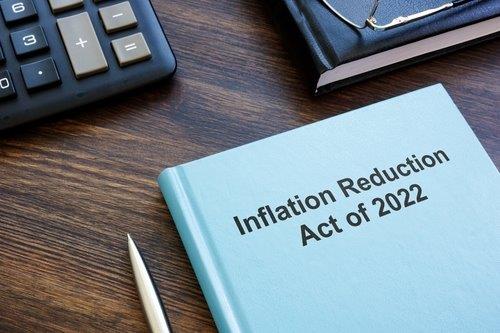 Inflation Reduction Act of 2022 (HR 5376) – This legislation was originally introduced as the Build Back Better Act, President Biden’s signature bill of 2021. After suffering defeat in the Senate, the bill was later revised with fewer provisions to enhance its likelihood of passage, and renamed the Inflation Reduction Act. The bill authorizes funding for investments in domestic energy production and manufacturing with the goal of reducing U.S. carbon emissions by 40 percent by 2030. The bill provides tax credits for clean energy home enhancements and electric vehicle purchases, permits Medicare to negotiate prescription drug prices,and extendslower healthcare premiums for insurance purchased via the Affordable Care Act program through 2025. Also billed as a deficit reduction tool, the legislation imposes a minimum 15 percent corporate tax rate on large businesses with more than $1 billion in reported income, and a 1 percent excise tax on corporate stock buybacks. Furthermore, the bill increases previously reduced funding for the IRS in order to help track down and recoup taxes unlawfully skirted by high income earners. Initially introduced on Sept. 27, 2021, the Act was passed by both the House and the Senate in August and signed into law on Aug. 16.



 Supply Chain Security Training Act of 2021 (S 2201) – This legislation is designed to identify supply chain risks and develop a government program to train federal officials with supply chain risk management responsibilities to prepare and mitigate those risks. The training program would cover the complete acquisition life cycle, including funding for data access and processing as well as appropriate technology and communication vehicles. The bill was introduced by Sen. Gary Peters (D-MI) on June 23, 2021. It passed in the Senate on Jan. 11 and in the House on May 10. It was signed into law by the president on June 16.